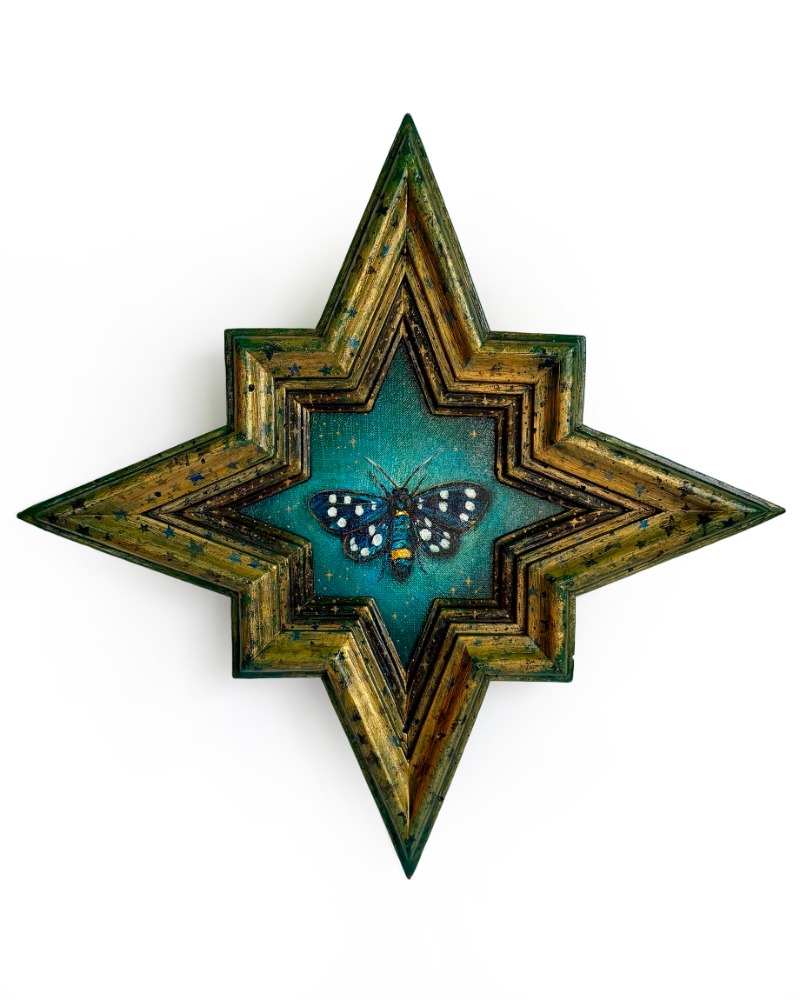
I leave room for interpretation with my art, but while painting Where the Night Keeps Light for Sanctuary of the Becoming, a question began gathering around its wings:
Who—and what—is beauty for?
At the center of the painting is a polka-dot wasp moth, dark and iridescent, its wings marked by small white spots. What we experience as beautiful also participates in its protection. Its vivid markings are a signal, a little lantern of warning carried into the daylight:
I am here. Understand what you are approaching.
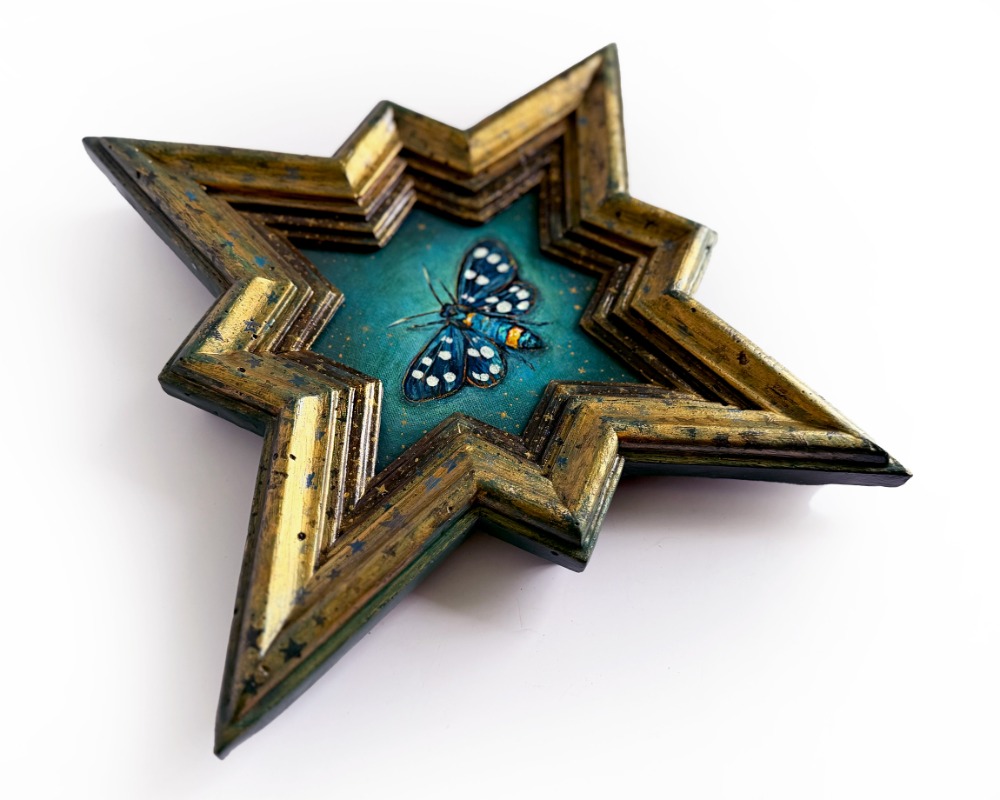
Nature is full of beauty that does more than wait to be admired. A ladybug’s shining red shell announces its defenses. Monarch orange carries a warning gathered from milkweed. Wasps wear black and gold like heraldry. Butterflies open their wings to reveal great false eyes, startling the hungry thing that ventured too close.
Nature’s beauty attracts, conceals, startles, defends. It can be delicate without being defenseless and magnificent without being available.
Sometimes beauty has teeth.
How different this is from the beauty many women are taught to perform.
From girlhood, we can absorb the idea that beauty should make us more pleasing, more welcome, more agreeable. We are taught to soften ourselves around the edges—to remain lovely while asking little, disturbing nothing, and receiving admiration graciously, even when the attention itself is unwanted.
Beauty becomes tangled with goodness.
Be beautiful. Be nice. Be accommodating. Smile. Do not make anyone uncomfortable. Do not take up too much room. Do not become difficult to hold.
But beauty was never one obedient species.
I have felt this tension in my own life through something as ordinary—and as deeply symbolic—as hair.
Growing up, I was not allowed to cut mine. Long hair was part of an inherited picture of how a girl should look, and the rules surrounding it were strict. At thirteen, I sat in a salon chair and asked for the bob I had wanted for years. I was frightened of what might be waiting when I returned home, but something within me knew the choice should be mine.
So I cut it.
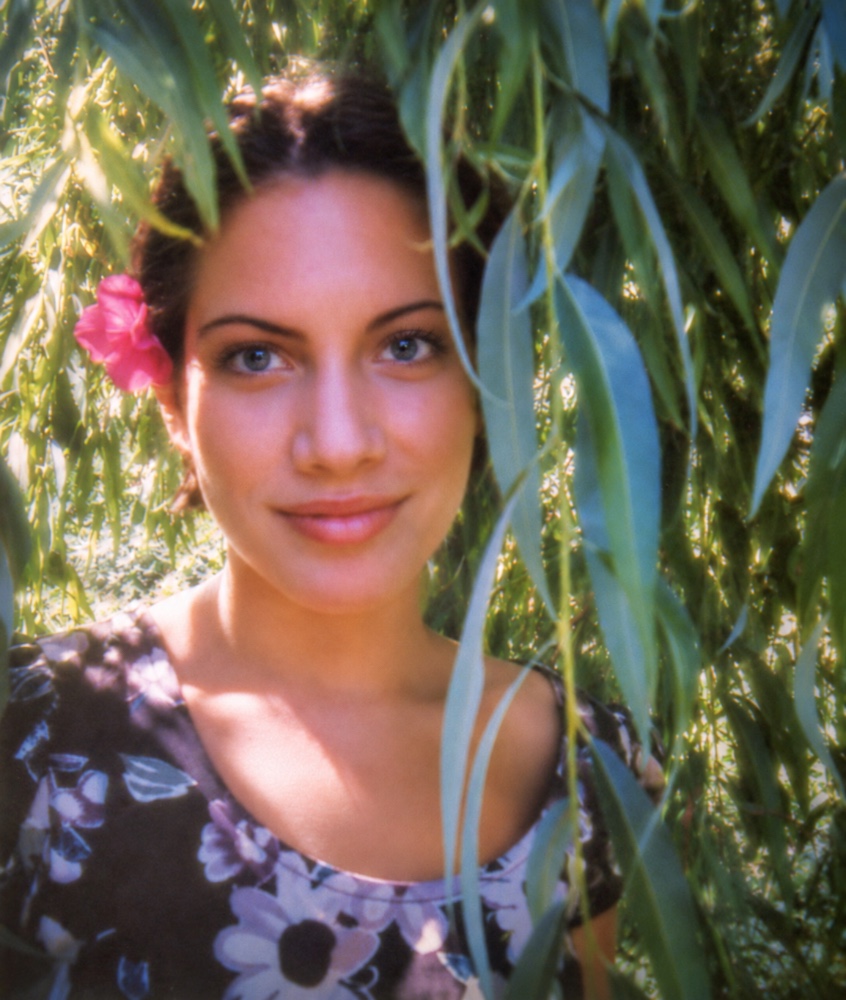
I did not choose the other side of fear because I had suddenly become fearless. I chose it because fear could no longer be allowed to answer for me. That small haircut became one of my earliest acts of self-recognition: the discovery that my appearance belonged to the person living inside it.
Years later, my hair had grown past my waist. I had grown it with the intention of donating it, and when the salon told me it was long enough, I chose a pixie cut—the kind Marisa Tomei wore in the nineties. I loved the lightness of it, the pleasure of seeing myself newly.
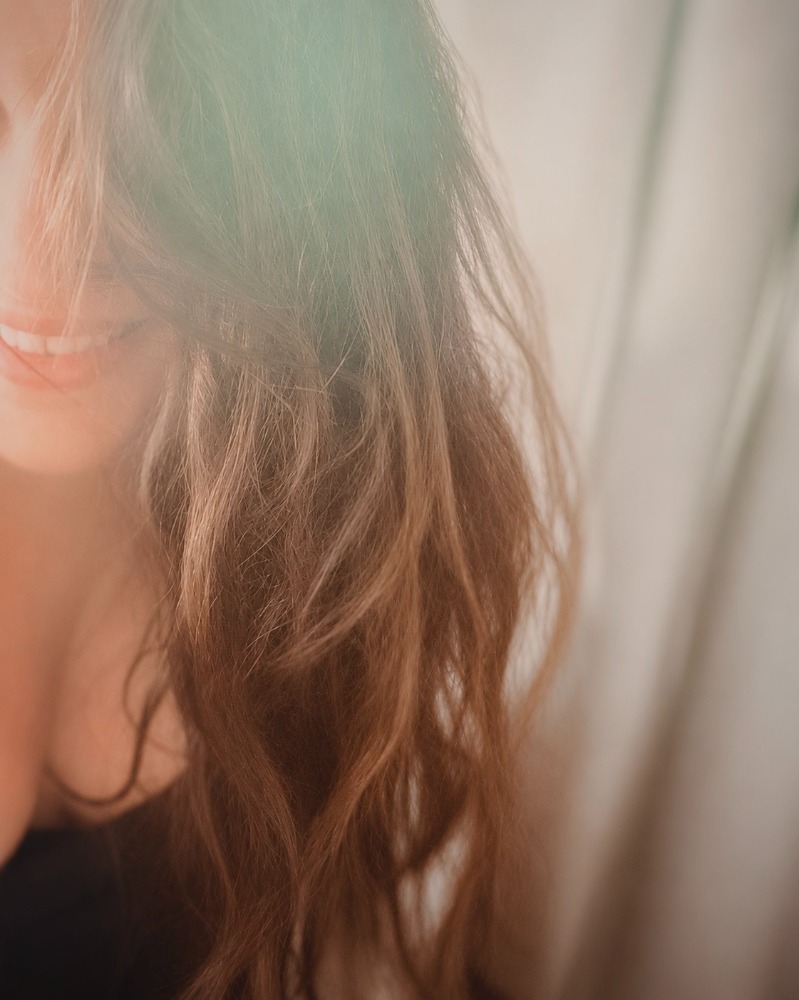
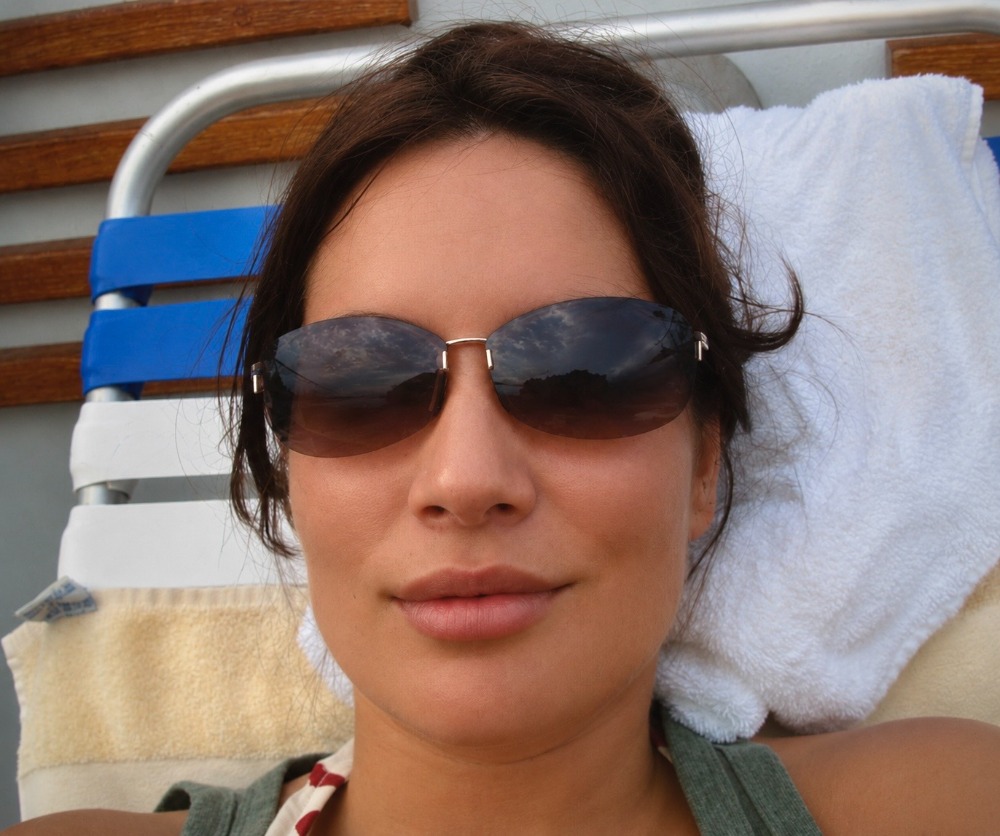
At the time, I was also receiving unwanted attention from a man who particularly loved my long hair. I had already asked him to leave me alone. When he saw the pixie, he told me I had ruined my hair and was no longer beautiful.
“Oh, good,” I said.
I had not cut my hair for him, but his disappointment clarified something. I did not owe beauty to a gaze I had not invited. If choosing freely made me less desirable to someone whose attention I did not want, I had lost nothing.
The girl in the salon chair had learned that she could choose her own reflection. The woman she became was learning something more: she could trust herself to know whose approval she did not need.
Beauty is a wilderness.
It is long hair and shaved heads, silver left uncovered and color chosen for sheer delight. It is ceremonial, practical, ornamented, bare. It lives in softness and sinew, in silk dresses and mud-caked boots. It appears in bodies that have carried children, survived illness, changed with age, crossed deserts, planted gardens, and begun again.
Beauty may be quiet, but it need not be silent.
It may welcome the gaze or turn away from it. It may be tender without surrendering. It may please no one but the person living within it. It may say yes.
It may also say no.
That knowing became part of this painting—not as a literal story hidden beneath its surface, but as a pulse within it.
The moth did not teach me that beauty will always keep us safe. Its markings opened a different question: what might beauty become when it is freed from fear, control, and the gaze that believes it owns what it sees?
Perhaps beauty can be pleasure without permission.
Ornament without availability.
Softness without surrender.
Perhaps it can be chosen, changed, offered, withheld, grown, cut away, or allowed to become wild.
There is a reclamation happening as women loosen inherited instructions and decide for themselves what beauty may mean. The old measurements remain all around us, sometimes disguised in newer language. Still, something is stirring—a refusal to remain arranged beneath someone else’s idea of femininity.
Women are remembering that being found desirable is not the highest reward.
We may choose beauty for joy, expression, identity, ritual, memory, play, worship, or no reason at all. We may choose not to perform it. Our bodies do not become public property simply because someone finds them beautiful. Attention is not ownership. Admiration is not permission.
And another person’s disapproval does not have to hold sway over you.
Here is where Where the Night Keeps Light enters the larger world of Sanctuary of the Becoming.
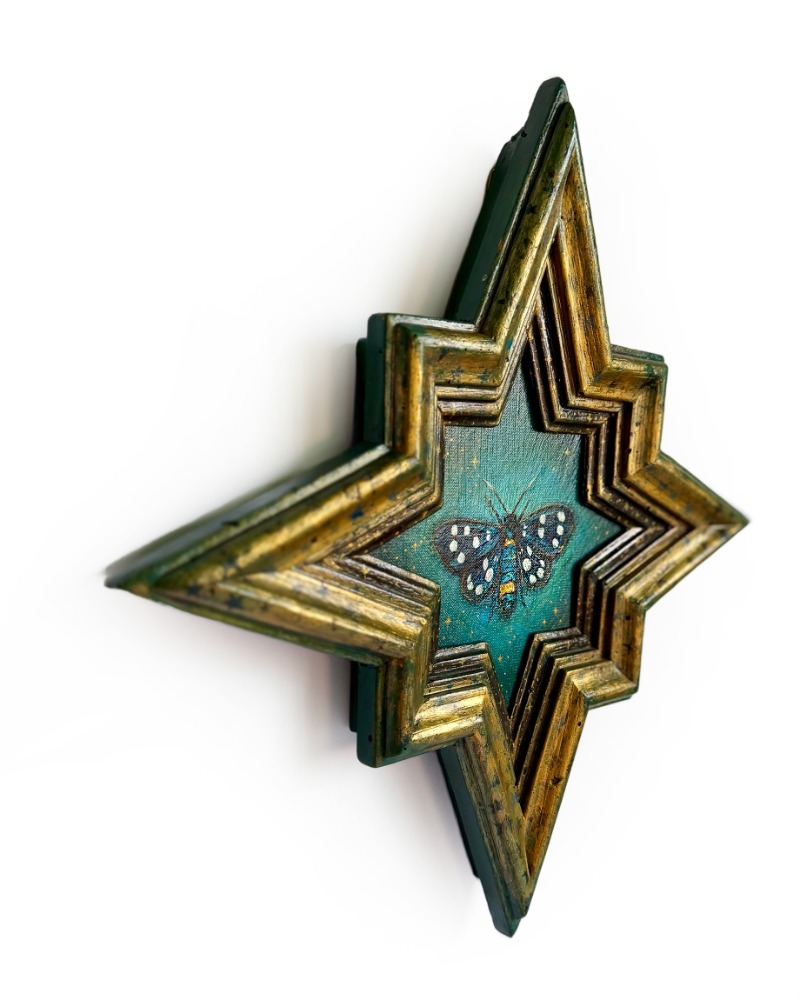
I have come to think that some becomings are less about inventing a new self than reclaiming what was always ours: the body, the voice, the instinct, the right to decide. Sanctuary is the room we make around that return. It is the place where we can hear ourselves beneath the old instructions.
Becoming may arrive as revelation, but it often begins much more quietly.
A preference honored.
A boundary believed.
A no left standing.
A reflection and a choice recognized as your own.
Everything I created for Sanctuary of the Becoming began somewhere deeply personal within me. And yet each work was also made simply to be beautiful—to offer its color, form, and little place of wonder.
That openness is one of the things I love most about art. A work may begin in my life, but its life does not end there. Once it enters the world, it meets the viewer and gathers meanings I could never have placed there alone.
This moth carries something of my story, but it may awaken an entirely different one in you.
Perhaps you were given a definition of beauty before you were old enough to question it. Perhaps you have already begun to loosen its hold. Perhaps some part of you is still waiting to discover what you would choose if no one else were allowed to answer for you.
What if beauty belongs to the one who bears it?
What if becoming is the slow and sacred discovery of what has been yours all along?
The little moth offers no command. It simply carries its markings into the light—beautiful, visible, and wholly its own.
Some beauty welcomes.
Some beauty warns.
Some beauty has teeth.
And sometimes becoming begins when we remember that ours may, too.